Swedish Regulatory Shifts Reshaping Live Football Markets and Casino Incentives on 365 Platforms
Mara Beck · Aug 18, 2026
Swedish Regulatory Shifts Reshaping Live Football Markets and Casino Incentives on 365 Platforms
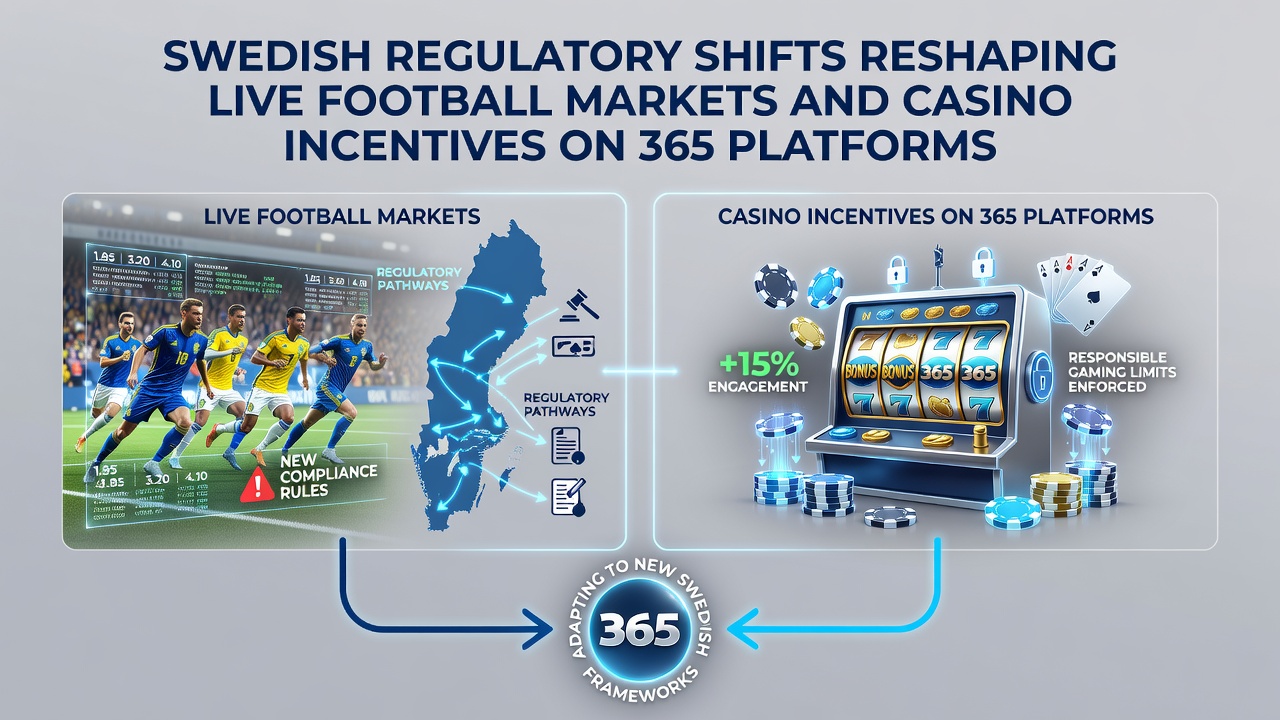
Swedish authorities have implemented a series of licensing and compliance adjustments that directly influence live football betting options alongside casino promotions on 365 platforms, and these measures build on earlier frameworks established by Spelinspektionen to address market conduct and consumer protections. Operators must now adhere to stricter reporting timelines for in-play markets, which has prompted adjustments in how live football odds are generated and displayed during matches.
Key Changes in Licensing and Market Oversight
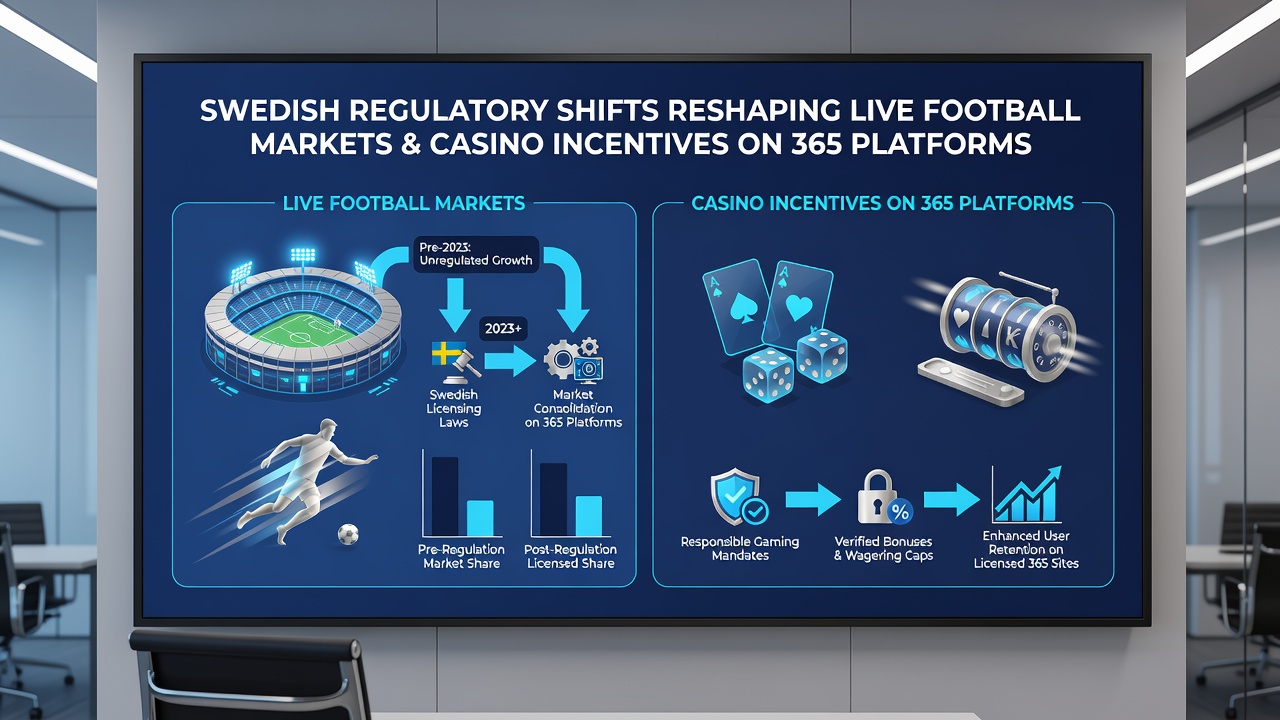
Updates rolled out through 2025 and into 2026 require 365 platforms to integrate enhanced verification protocols before allowing access to live football sections, while casino incentive structures face caps on promotional frequency and value. Data from the European Gaming and Betting Association shows that licensed operators reduced certain bonus types by approximately 25 percent in the first half of 2026 to meet new spending thresholds. These requirements connect live betting activity with overall account monitoring, creating unified compliance systems that track both football wagers and casino play in real time.
August 2026 marks the start of mandatory quarterly audits for all active 365 operators, and these reviews examine how live football markets respond to sudden regulatory notifications about match integrity. Platforms have introduced automated alerts that pause betting during high-risk periods, a direct response to Spelinspektionen guidance on event monitoring.
Effects on Live Football Markets
Live football offerings on 365 platforms now operate under tighter parameters that limit the number of simultaneous markets during certain matches, and this stems from rules requiring pre-approval for complex in-play features. Researchers at the University of Melbourne documented similar patterns in other regulated jurisdictions, noting that reduced market variety correlates with lower dispute rates among players. Swedish operators have responded by expanding simpler, high-volume options such as next-goal or corner markets while scaling back niche proposition bets.
Yet the regulatory focus also encourages greater transparency in odds compilation, with 365 platforms required to publish historical data on live market adjustments. Observers note that this has led some providers to partner with third-party data firms to maintain compliance without interrupting in-game betting flows.
Adjustments to Casino Incentives
Casino promotions on 365 platforms have undergone restructuring to align with new loss-limit integrations that apply across both sports and gaming verticals. Figures released by the Ontario Lottery and Gaming Corporation indicate that cross-vertical incentive models in comparable markets achieved higher retention when operators synchronized bonus terms with responsible gambling tools. Swedish platforms now tie casino deposit matches and free spins to weekly activity caps, reducing the scope for rapid rollover campaigns that previously dominated player engagement strategies.
These shifts coincide with requirements that all casino incentives display clear eligibility criteria tied to live football participation thresholds, and the result is a more segmented approach where players receive tailored offers based on verified activity history. Platforms have introduced loyalty tiers that reward consistent, lower-volume play rather than high-stakes bursts, reflecting the broader regulatory emphasis on sustained compliance.
Industry Responses and Implementation Timeline
Operators managing 365 platforms have invested in backend systems that automatically flag incentive redemptions exceeding defined thresholds, and this technology integrates with live football market controls to prevent simultaneous promotions that breach new guidelines. Training programs for compliance staff now cover both regulatory updates and technical adjustments, ensuring teams can handle queries related to either vertical without separate workflows.
By late 2026 further refinements are scheduled that will standardize data-sharing formats between 365 platforms and Spelinspektionen, allowing faster identification of patterns across live football and casino segments. Industry reports suggest these formats will reduce manual reporting burdens while maintaining the level of oversight introduced earlier in the year.
Conclusion
Swedish regulatory developments continue to drive structural changes across live football markets and casino incentives on 365 platforms, with August 2026 serving as a milestone for expanded audit and reporting obligations. The combined effect has produced more integrated compliance environments that link betting activity, promotional structures, and consumer safeguards under unified frameworks. Ongoing implementation will determine how these platforms sustain operational flexibility while meeting the established requirements.